

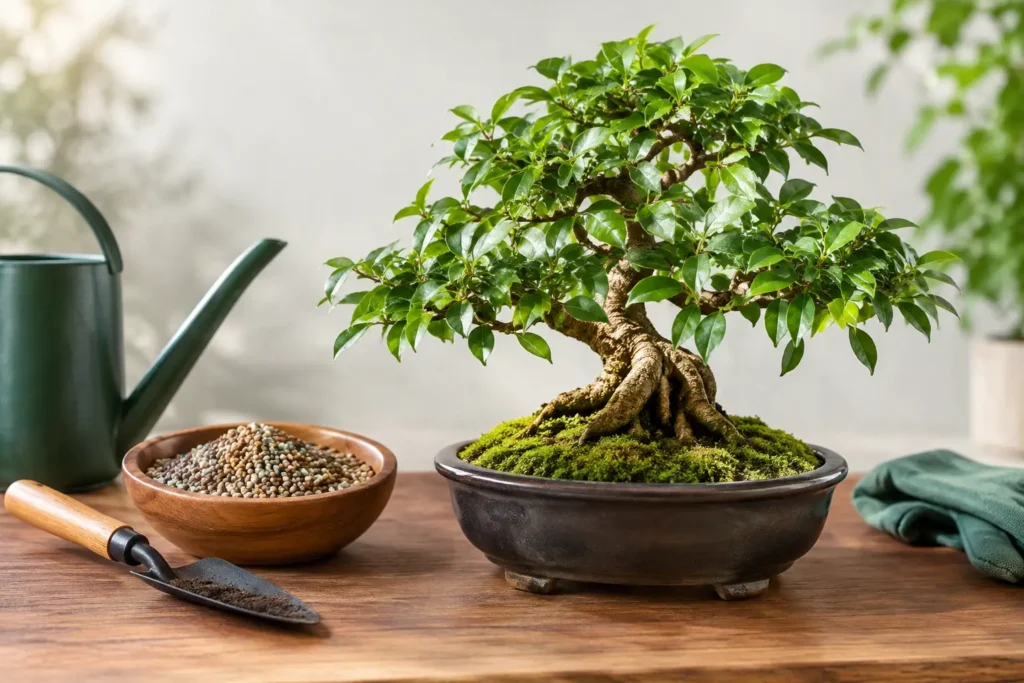
A ficus bonsai can grow surprisingly fast when it is warm, well lit and happy. That is why the best fertiliser for ficus bonsai is not usually the strongest one on the shelf. It is a balanced, complete fertiliser you can apply gently and regularly while the tree is actively growing.
For most beginners, a liquid bonsai fertiliser or general-purpose liquid plant food is the easiest choice. It gives you control, is simple to dilute, and lets you stop feeding quickly if your tree is stressed. Slow-release pellets can work well too, especially if you travel or prefer fewer jobs, but they need a lighter hand in a small bonsai pot.
The best fertiliser for ficus bonsai: our practical pick
If you want one straightforward answer, choose a balanced liquid fertiliser with trace elements, diluted to half the rate shown on the label. Look for an NPK ratio that is reasonably even, such as 10-10-10, 8-8-8 or similar. NPK means nitrogen, phosphorus and potassium, the three main nutrients plants use.
A balanced feed supports leafy growth, root health and the general resilience your ficus needs after pruning or warm weather. Trace elements matter as well. In a shallow pot, nutrients wash through quickly, and ficus can show pale new growth when they are short on micronutrients such as iron or magnesium.
You do not need an expensive product labelled exclusively for bonsai. A quality liquid fertiliser made for indoor plants, foliage plants or general garden use can do a good job, provided it is complete and you dilute it carefully. Bonsai-specific fertilisers are convenient because their directions are often gentler, not because ficus roots demand something mysterious.
Liquid feed or slow-release pellets?
Both can be good choices. The better option depends on how you care for your tree and where it lives.
Liquid fertiliser is best for control
Liquid feed is the friendliest option for a first ficus bonsai. Mix it in your watering can and apply it to already-moist soil every one to two weeks during active growth. In many parts of Australia, that may be from spring through autumn, and even longer for a tropical ficus kept in a bright, warm position.
Because it is applied often, you can adjust it easily. If the weather turns cold, your tree is moved indoors, or it is recovering from repotting, simply pause feeding. That flexibility is useful when you are still learning your tree’s rhythm.
Seaweed tonics and fish-based products can also be helpful, particularly after heat stress or repotting. Think of them as a gentle supplement rather than a complete fertiliser. Some contain useful nutrients, but check the label before relying on them as the only food your ficus receives.
Slow-release fertiliser suits busy owners
Slow-release pellets release nutrients bit by bit each time you water. They are handy for outdoor ficus bonsai in a sunny spot, especially if regular fortnightly feeding is likely to fall off the to-do list.
Choose a controlled-release product with a balanced analysis and use less than the packet suggests for a full-sized potted plant. A bonsai pot holds very little soil, so a few pellets can be plenty. Place them on the soil surface, away from the trunk, and replace them according to the product’s stated release period.
The trade-off is less control. Hot weather can speed up nutrient release, while a tree that stops growing in a cool patch may still have fertiliser sitting in its pot. If you use pellets, inspect your ficus regularly and avoid adding liquid feed on top unless the tree is clearly growing strongly and you are using both at reduced rates.
What fertiliser ratios actually mean
The three numbers on a fertiliser pack are the NPK ratio. Nitrogen is the first number and encourages green, leafy growth. Phosphorus supports roots and flowering, while potassium helps with overall plant function and toughness.
Ficus bonsai are grown mainly for their foliage and trunk development, so they appreciate some nitrogen. But very high-nitrogen lawn food is not the answer. It can push soft, oversized leaves and long shoots that need constant pruning. Strong growth might look impressive for a week, but it can make a compact bonsai harder to manage.
A balanced fertiliser is the sensible year-round choice. If you are deliberately thickening a young ficus trunk in a larger training pot, a slightly higher-nitrogen fertiliser can help during the warm growing season. Once the tree is in a small display pot and you want tidy growth, return to a balanced feed at a modest dose.
How often should you fertilise a ficus bonsai?
Feed only when the tree is actively growing. New leaves, extending shoots and warm conditions are all good signs. For liquid fertiliser, half-strength every one to two weeks is a reliable starting point. For slow-release fertiliser, follow the product’s timing but use a conservative amount.
In a warm Australian climate, an outdoor ficus may grow for much of the year. In cooler areas, or if your bonsai spends winter near a chilly window, growth can slow right down. Reduce feeding to monthly or stop it altogether until you see fresh growth again.
A few situations call for patience rather than fertiliser:
- Do not fertilise a bone-dry tree. Water it first, then feed later that day or at the next watering.
- Pause feeding for two to four weeks after major root pruning or repotting. Fresh roots are more valuable than a fertiliser boost at this stage.
- Do not feed a sick ficus just because its leaves are yellow. First check light, watering, drainage and pests.
- Skip fertiliser during a heatwave if the tree is wilted or drying out rapidly. Keep it watered and sheltered from harsh afternoon sun instead.
Avoid the two common feeding mistakes
The first mistake is feeding too much. White crust on the soil, browned leaf edges, drooping growth despite damp soil, or a sour-looking pot can point to a build-up of fertiliser salts. Flush the pot thoroughly with plain water a few times, let it drain well, and hold off feeding for several weeks.
The second is expecting fertiliser to fix a light problem. Ficus need bright conditions to use nutrients properly. A tree kept in a dim room may stay weak, drop leaves and grow lanky no matter how carefully you feed it. Put it in the brightest suitable position you have, ideally with gentle morning sun if your species and climate allow it.
Watering matters just as much. Bonsai should be watered when the soil begins to dry, not on a strict calendar. If the potting mix stays wet for days, roots cannot breathe properly, and fertiliser can make matters worse rather than better.
A simple buying checklist
When you are standing in the garden centre, keep it uncomplicated. Choose a fertiliser that is complete, has a balanced NPK ratio, includes trace elements and gives clear dilution instructions. A liquid product is the safer first purchase. If you would rather use pellets, choose controlled-release fertiliser and start with less than you think you need.
Avoid fertilisers made only for flowering plants, very strong lawn fertilisers, and products that promise dramatic results. Your ficus bonsai does not need drama. It needs steady light, sensible watering and small meals while it is growing.
Give it that calm routine, watch how it responds over a season, and you will soon know more than any fertiliser label can tell you.