

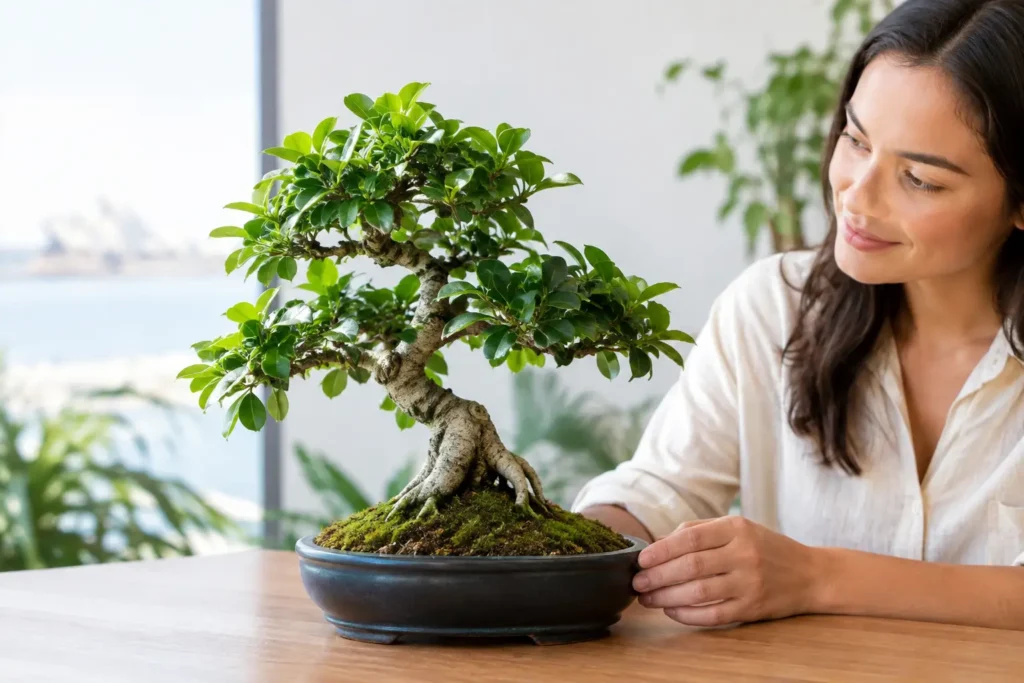
A ficus is often the bonsai that makes a beginner think, “Right, I can actually do this.” If you want to buy a ficus bonsai in Australia, you are choosing a tough, forgiving tree with glossy foliage, interesting roots and a good chance of bouncing back from the occasional learning curve.
That does not mean every ficus on a shop bench is a good buy. The best first tree is not necessarily the oldest, largest or most dramatic one. It is the healthy tree that suits the light, temperatures and attention you can realistically give it. A little honesty at the start saves a lot of yellow-leaf detective work later.
Why ficus makes sense for Australian beginners
Ficus bonsai cope well with warmth, recover strongly after pruning and generally tolerate beginner mistakes better than many temperate bonsai. In much of Australia, they can live outside for most or all of the year in a bright, protected position. Their leaves may be small already, or they may reduce gradually as the tree develops more branching.
They are not invincible, though. Ficus dislike cold snaps, frosts and sudden changes in conditions. A tree raised in a warm nursery can drop leaves after moving to a shaded lounge room, even if it looked perfect on the day you bought it. That is usually an adjustment response, not a sign you have ruined it before breakfast.
For a first purchase, look for common ficus varieties with a clear care history rather than chasing a rare label. Ficus microcarpa, often sold as Chinese banyan or Indian laurel fig, is a popular choice. It commonly develops chunky exposed roots and handles pruning well. Ficus rubiginosa, the rusty fig, is an Australian native species that can be an excellent option for warm, bright outdoor conditions. Ficus benjamina can make a lovely bonsai too, but it can be more prone to leaf drop when moved.
Where to buy ficus bonsai in Australia
You can find ficus bonsai at specialist bonsai nurseries, local garden centres, weekend markets and online sellers. Each option has a trade-off, so choose based on what you need from the purchase.
A specialist nursery is usually the strongest starting point if you are new. You can inspect the roots, leaves and soil, ask what variety it is, and find out whether it has been growing indoors, in a shade house or out in the open. Staff who grow bonsai themselves should be able to tell you how much sun the particular tree receives and when it was last repotted.
Garden centres can offer good value and convenience, particularly when plants are freshly delivered. The range may be less carefully styled, but a healthy young ficus can be a better learning tree than an expensive, heavily shaped specimen. You are buying potential, not just a tiny landscape in a pot.
Online buying is useful when specialist nurseries are not nearby or you want a particular species. Check that the seller provides current photos where possible, explains the pot size and tree height, and has a sensible process for weather delays. Mailing a living plant is not the same as posting a pair of socks. Ask whether the tree is sent bare-rooted or potted, how it is secured, and what happens if it arrives damaged.
Avoid buying purely from a polished photo with no species name, no care information and no indication of the actual plant you will receive. A bargain can become expensive if it arrives stressed, poorly packed or planted in dense, soggy soil.
What to check before you buy
A ficus does not need to look like a centuries-old tree to be worth taking home. In fact, a younger tree with healthy growth can give you more room to learn pruning and styling. Inspect it with a calm eye rather than getting distracted by a decorative pot or a glued-on pebble surface.
Start with the foliage. Leaves should look firm and reasonably clean, with fresh growth at the tips during the growing season. A few marked leaves are not automatically a deal-breaker, especially on a tree that has travelled. Widespread yellowing, limp growth or a lot of leaf loss deserves a question before you pay.
Then look closely under leaves and along stems for scale insects, mealybugs and webbing from spider mites. Scale can look like tiny brown or white bumps that do not brush away easily. A small pest issue can be treated, but beginners are better off choosing a clean tree when there are other options on the bench.
Check the trunk at soil level. You want a trunk that feels firm, not soft or wrinkled. Surface roots should look alive and anchored, not blackened or mushy. If the pot has drainage holes, peek underneath. A few roots are normal. A solid mass of circling roots suggests the tree may be overdue for repotting, which is manageable but worth factoring into the price.
Finally, assess the soil. Good bonsai soil has open particles that allow water and air to reach the roots. It may include pine bark, scoria, pumice or similar gritty material. Very fine, compacted potting mix can stay wet for too long, particularly inside. Do not repot a newly purchased ficus on day one just because the soil looks unfamiliar, but do ask when it was last done and plan ahead.
Match the tree to your growing spot
The question is not simply whether ficus is an indoor bonsai. It is whether your particular spot provides enough bright light and stable warmth. Most ficus perform best outdoors in bright light, with protection from harsh summer afternoon sun while they are settling in. In cooler areas, a bright sheltered patio, verandah or courtyard can be ideal through the warmer months.
If you plan to keep yours indoors, place it right beside the brightest suitable window, not across the room where the light looks pleasant to you but is weak for a tree. Rotate the pot occasionally for even growth. Keep it away from heating vents, air-conditioners and cold glass in winter.
Ask the seller how the tree has been grown, then try to provide similar conditions initially. Moving it from a humid shade house into full western sun, or from outdoors to a dim shelf, is where many new owners run into trouble. Make changes gradually over a week or two.
What is a fair price for a ficus bonsai?
Price reflects more than age. Trunk thickness, root spread, branch structure, pot quality, species and years of training all influence the cost. A young, healthy starter ficus in a basic pot may be an affordable way to begin. A refined, mature tree with a broad trunk and well-developed branch structure can cost considerably more because someone has put years into growing it.
For a first bonsai, it is usually sensible to buy a tree you can enjoy working on without feeling frightened to touch it. Leave enough of your budget for a watering can with a fine rose, sharp pruning scissors and, eventually, suitable bonsai soil. You do not need a full workshop on day one.
Be cautious of very cheap ficus marketed as bonsai when they are simply young plants cut into a rough shape and placed in a shallow pot. They can still be enjoyable, but the price should reflect that. There is nothing wrong with a starter tree as long as it is sold honestly.
Bring your new ficus home without upsetting it
Before collecting your tree, clear a spot for it. Protect it in the car from hot sun, cold wind and sliding about in the boot. If you are travelling any distance, ask the nursery to wrap the pot and branches lightly.
At home, give the ficus a thorough drink only if the soil is starting to dry. Do not water by calendar. Push a finger about a centimetre into the mix and water when it is just becoming dry at that depth. Water until it runs freely from the drainage holes, then let the pot drain.
For the first two weeks, resist the urge to prune, wire, repot and photograph it from seventeen angles. Put it in its chosen bright position and let it settle. A little leaf drop can happen after transport, but continued leaf loss combined with wet soil, poor light or cold conditions needs action.
Questions worth asking the seller
Before you commit, ask what species it is, how long it has been in its current pot, where it has been growing and whether it has had any recent pruning or repotting. If it is labelled as an indoor bonsai, ask how much direct or bright light it has actually received. These answers are more useful than a generic care tag.
Also ask whether the tree has been treated for pests and what fertiliser routine it has been on. You do not need to copy the nursery exactly, but sudden changes in feeding and watering can add stress while the tree is settling.
A well-chosen ficus gives you room to observe, make small decisions and see the results. Pick the healthiest tree you can find, give it honest light and sensible watering, and let the bonsai part grow at a human pace.